

#1 cloprostenol1
ESTRUMATE® (cloprostenol injection) is a leading prostaglandin and improves reproductive performance in dairy and beef cattle. This reproductive tool allows for better management of heat detection, breeding, calving intervals and the scheduling of entry of heifers into the milking herd.
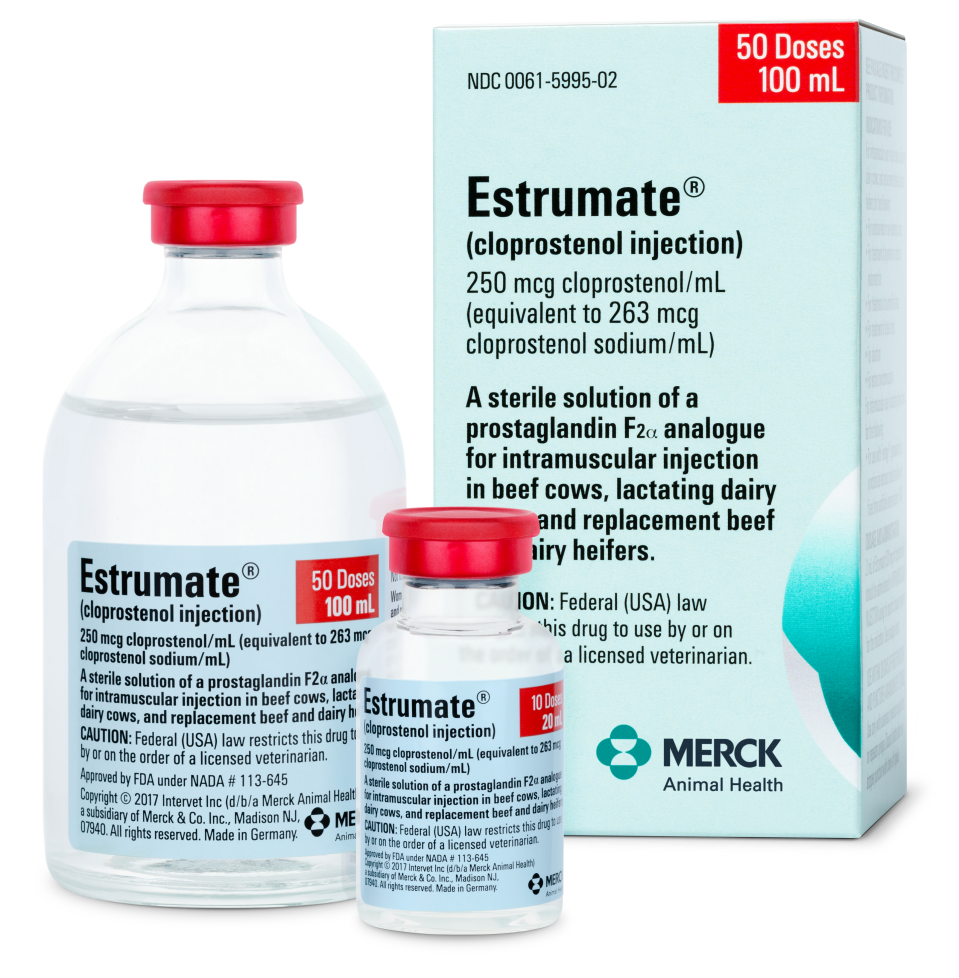
Dosage & Administration
- 2 mL of ESTRUMATE (500 mcg cloprostenol) per cow via intramuscular injection.
- Available in 20 mL and 100 mL bottles.
See product label for complete dosing regimen for each indication.

ESTRUMATE IS APPROVED FOR:
ESTRUMATE is approved for the following in lactating dairy cows, beef cows and replacement beef and dairy heifers:
- Unobserved or non-detected estrus
- Treatment of pyometra or chronic endometritis
- Treatment of mummified fetus
- Treatment of luteal cysts
- Estrus synchronization
- Termination of unwanted pregnancies
ESTRUMATE is also approved for use with FERTAGYL® (gonadorelin) to synchronize estrous cycles to allow for fixed-time artificial insemination in lactating dairy cows.
Research
ESTRUMATE is a prostaglandin analogue that causes regression of the corpus luteum, which results in estrus in two to five days in cycling animals. ESTRUMATE is known to have a long half-life of three hours2, and research has shown it is a strong luteolytic agent. Better luteolysis is related to better conception.


Join many other dairy and beef cattle producers in using the #1 cloprostenol on the market
There are many options for synchronization of estrus and ovulation in cattle, so consult your veterinarian to select an appropriate program for your operation.
To increase your herd’s reproductive efficiency, choose a synchronization program that includes both ESTRUMATE and FERTAGYL.

Sign up to receive cattle health management insights, industry news and more sent straight to your inbox.
ESTRUMATE IMPORTANT SAFETY INFORMATION
Do not administer ESTRUMATE to a pregnant cow unless abortion is desired. Severe localized post-injection clostridial infections have been reported; in rare instances infection has led to death. Women of childbearing age, asthmatics, and persons with respiratory problems should exercise extreme caution when handling ESTRUMATE. ESTRUMATE is readily absorbed through the skin and can cause abortion and/or bronchospasms; direct contact with the skin should be avoided, and accidental spillage on the skin should be washed off immediately with soap and water. For complete safety information, refer to the product label.
FERTAGYL IMPORTANT SAFETY INFORMATION
Not for use in humans. Keep out of reach of children. For complete safety information, refer to the product label.
REFERENCES
1Animalytix, MAT July 2020.
2European Agency for the Evaluation of Medicinal Products, Committee for Veterinary Medicinal Products, Cloprostenol and R-Cloprostenol Summary Report, 1997.